
While enjoying fruits and vegetables, have you ever wondered about the tiny “nano-bubbles” hidden within them that are quietly changing the future?
Extracellular vesicles (EVs) derived from fruits, vegetables, and medicinal plants have recently emerged as rising stars in cosmetic science due to their safety, low irritation, and potent bioactivity.
Plant EVs are naturally secreted nanoscale vesicles (approximately 30–200 nm) from plant cells.
Encapsulated by lipid membranes, they enhance skin absorption of active ingredients such as:
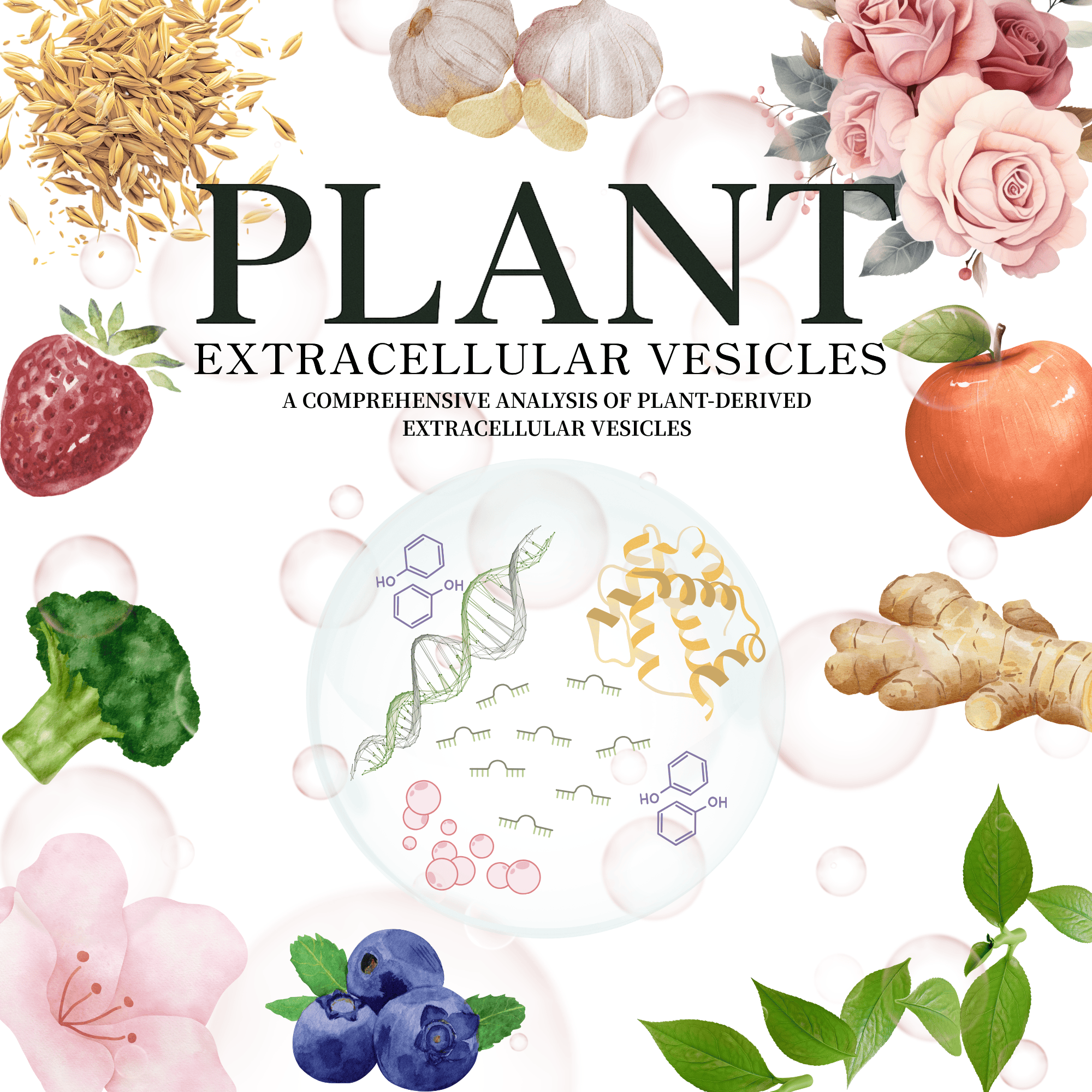
- Natural antioxidants (e.g., polyphenols, flavonoids)
- Small bioactive molecules (e.g., plant acids, secondary metabolites)
- Nucleic acid signaling molecules (e.g., miRNA)
- Enhanced stability: Reduces oxidation and degradation of ingredients
- Deep penetration: Helps absorb active ingredients
- Gentle formulation: Naturally sourced, low skin irritation
 1. Anti-Aging × Maintaining Elasticity and brightening
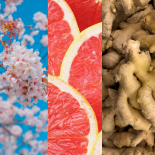
Cherry Blossom, Rose EVs: Promote skin repair, helping maintain elasticity and brightening
Grapefruit EVs: Rich in antioxidant lipids and miRNA, neutralize free radicals and support youthful firmness
Ginger EVs: Help maintain collagen under environmental stress, keeping skin firm
2. Soothing × Relieving Discomfort from External Irritation
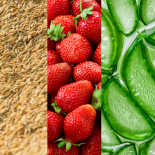
Rice Bran, Garlic EVs: Gentle properties help soothe skin discomfort
Strawberry, Grape EVs: Enhance hydration and protection, reducing sensitivity from environmental factors
Broccoli, Aloe EVs: Help calm the skin and reduce discomfort
 3. Antioxidant × Boosting Skin Defense
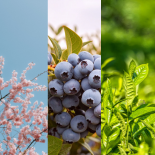
Cherry Blossom EVs: Rich in polyphenols and flavonoids, reduce free radical damage and strengthen skin defense
Blueberry, Strawberry EVs: Contain natural antioxidants that brighten dull skin and improve elasticity
Green tea, Turmeric, Broccoli EVs: Polyphenols and flavonoids support skin’s environmental defense.
4. Repair × Promoting Skin Renewal
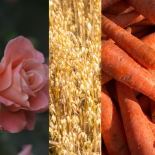
Rose EVs: Support fibroblast and keratinocyte activity, aiding skin repair
Rice Bran, Barley, Buckwheat EVs: Help maintain skin health and accelerate recovery
Celery, Carrot EVs: Rich in vitamins and plant actives, support keratin regulation and smooth skin texture
 5. Moisturizing × Enhancing Barrier Function
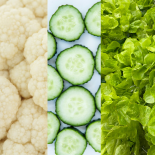
Cherry Blossom, Broccoli EVs: Increase moisture in the stratum corneum, maintain barrier integrity, and relieve dryness
Strawberry, Aloe, Cucumber EVs: Support skin’s hydration mechanisms and moisture retention
Rice Bran, Lettuce EVs: Condition the skin, keeping it soft and hydrated
Characterized by “natural × scientific × safe,” plant EVs show multi-functional potential in anti-aging, soothing, antioxidant, repair, and hydration. Gradually transitioning from lab research to clinical and daily applications, they represent a new form of “natural nano-energy.” In the future, plant EVs are poised to become core ingredients in premium skincare products, bringing vitality, youthfulness, and brightening to the skin.
References:
Pharmacological Research. 2021 Dec;166:105490.
Plant Nano Biology. 2023 Apr;10(1):e03931.
Current Issues in Molecular Biology. 2025 Sep;47(9):776.
Nature Plants. 2021 Oct;7(10):1397–1408
International Journal of Molecular Sciences. 2024;25(3):e18621954
Molecular Therapy. 2021 Jan;29(1):e33278566.
Asian Journal of Pharmaceutical Sciences. 2022;17(1):e35261644.
Journal of Cosmetic Dermatology.2023;22(12), 3326-3336.
Food Funct. 2023;14(16):7520-7534.
Journal of the American College of Nutrition.1991;10(6), 593–601.
Nanomaterials (Basel, Switzerland).2025;15(13), 1005.
Pharmacological research.2022;185, 106472.
PLoS ONE.2018;13(10): e0205061.