
Hair Follicle Dermal Papilla Cells (HFDPCs) are specialized mesenchymal cells located at the base of the hair follicle. They serve as core regulators of the hair follicle cycle by secreting bioactive signaling molecules that communicate with surrounding hair follicle stem cells. Through this signaling network, HFDPCs orchestrate the transition of hair follicles between the anagen (growth), catagen (regression), and telogen (resting) phases. In essence, HFDPCs act as a decisive regulatory hub that determines whether a hair follicle enters and maintains a growth state.
 The Command Center of the Hair Follicle: The Critical Role of HFDPCs and Exosomes
Hair growth requires highly coordinated cellular interactions. Within this tightly regulated system, Hair Follicle Dermal Papilla Cells (HFDPCs) function as the command center—transmitting signals, coordinating timing, and determining when a follicle activates or rests.
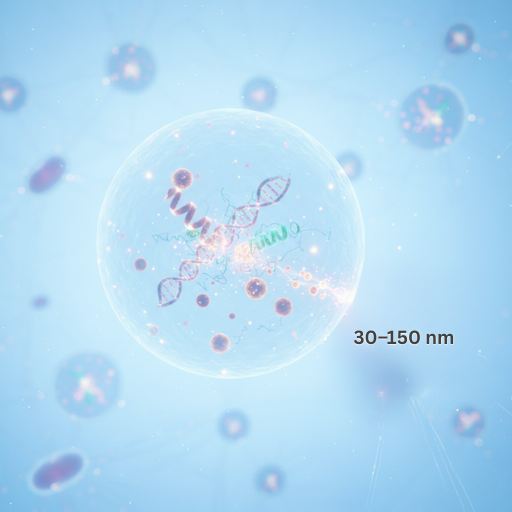
Researches have shown that one of the primary mechanisms by which HFDPCs communicate with other cells is through exosomes.
Exosomes are nanoscale extracellular vesicles released by cells. They carry molecular cargo such as proteins, RNA, and microRNAs (miRNAs). Acting as biological information parcels, exosomes can be taken up by recipient cells, where their contents are interpreted to modulate cellular behavior and gene expression.
 Studies indicate that exosomes secreted by HFDPCs contain a specific microRNA known as miRNA-181a-5p. This molecule has been shown to activate the Wnt/β-catenin signaling pathway.
Evidence suggests that certain miRNAs regulate the expression of pathway-related molecules, influencing the stability and nuclear activity of β-catenin. Through this regulatory mechanism, miRNA-181a-5p contributes to the activation of hair follicle stem cells and the transmission of hair growth signals. Once the Wnt/β-catenin pathway is activated, the proliferative capacity of hair follicle stem cells increases, supporting the maintenance of healthy hair growth.
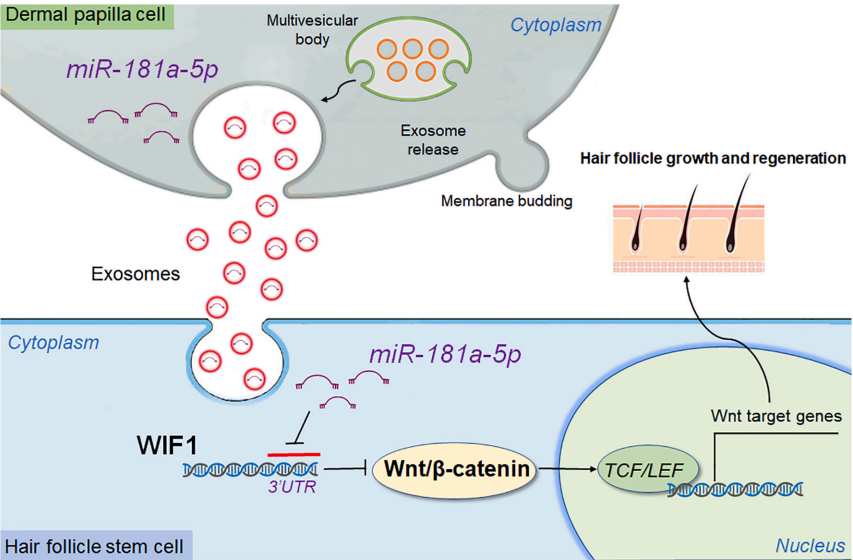
Hair Follicle Dermal Papilla Cells → Exosomes → microRNA → Signaling Pathway → Hair Follicle Growth
This study provides a clearer scientific framework for understanding the role of exosomes and specific microRNAs in hair follicle–related applications.
Zhao B, Li J, Zhang X, et al. International Journal of Biological Macromolecules. 2022;207:110–120. doi:10.1016/j.ijbiomac.2022.02.177
Translated and edited by Sparkling Sciences
Source:Zhao, B., Li, J., et al. (2022). Exosomal miRNA-181a-5p from the cells of the hair follicle dermal papilla promotes hair follicle growth and development via the Wnt/β-catenin signaling pathway. International Journal of Biological Macromolecules, 207, 110–120.